
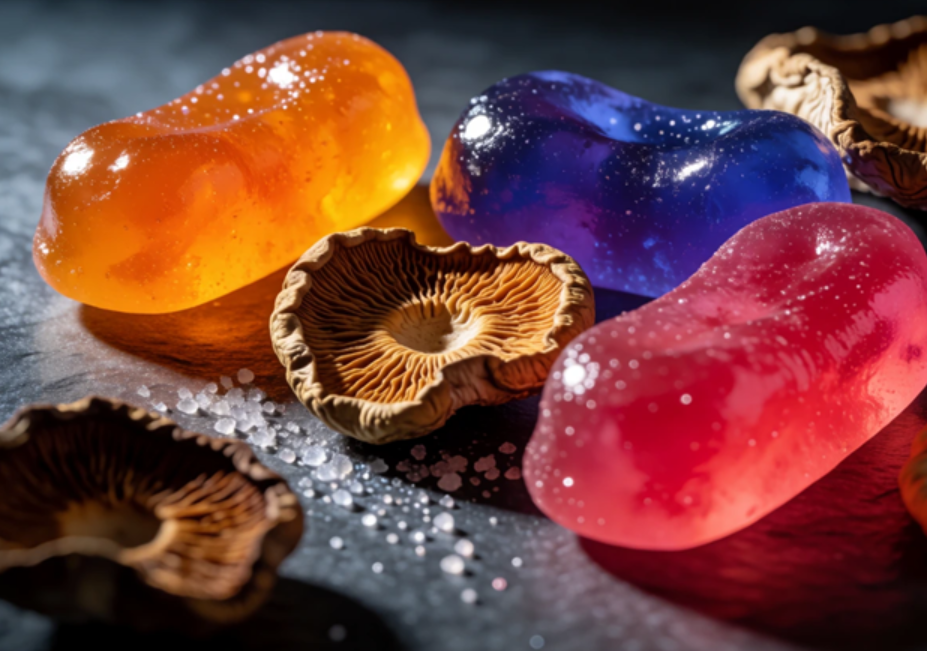

Anyone who has chewed through a handful of dried mushrooms remembers the taste. It’s somewhere between cardboard and damp soil, with a texture that sticks in your teeth. For years, people masked it with peanut butter, orange juice, or chocolate.
Magic mushroom Online Gummies Store solve that problem at the source. The mushroom material is blended into a flavored gummy base, portioned into equal pieces, and packaged so you know roughly what each one contains. Here’s what sets them apart and what to look for when choosing a bag.
How Magic Mushroom Gummies Are Made
Most producers start with dried Psilocybe cubensis mushrooms. From there, they take one of two routes.
The first is grinding the dried mushrooms into a fine powder and mixing it directly into the gummy batter. It’s simple and keeps the whole mushroom intact, though some of the earthy flavor can come through.
The second route uses an extract. The mushroom material is soaked, filtered, and concentrated, then added to the gummy base. Extract gummies usually taste cleaner and have a smoother texture because there’s no plant fiber in them.
Neither method is automatically better. Powder-based gummies appeal to people who prefer a whole-mushroom product. Extract-based gummies tend to win on flavor.
Gummies vs. Dried Mushrooms
Dried mushrooms vary a lot. A cap can be more potent than its stem, and two mushrooms from the same flush can differ noticeably. Weighing out a dose on a kitchen scale helps, but it’s still an estimate.
Gummies spread the mushroom material evenly through a batch, so each piece should land close to the number printed on the package. That consistency is the main reason many repeat buyers switch.
There are a few other practical differences:
- Taste: Fruit flavors like mango, blue raspberry, and watermelon replace the earthy bitterness.
- Discretion: A gummy looks like any other candy in a bag or on a desk.
- Portioning: You can cut a gummy in half with a knife, which is much harder to do accurately with a dried cap.
- Shelf life: Sealed gummies stored in a cool, dark spot generally stay fresh for several months.
Popular Strains Used in Gummies
Some brands list the strain on the label, which is a good sign of transparency. Golden Teacher is one of the most common because it’s widely grown and well-known. Penis Envy shows up in higher-strength products, and Albino A+ and B+ appear in some specialty lines. Knowing the strain won’t tell you everything about the experience, but it does tell you the brand knows what it’s putting in the bag.
What the Experience Is Like
Gummies generally take longer to kick in than people expect, often 45 minutes to an hour and a half, because the gummy has to be digested first. Eating one on an empty stomach can speed things up a little. A heavy meal beforehand tends to slow it down.
Taking a second gummy because “nothing’s happening” after 40 minutes is the most common mistake. Set a timer for two hours and wait it out before deciding.
Choosing Your First Bag
Start with a lower-strength package from a brand that lists potency per piece, shows its ingredients, and prints a batch number. Pick a flavor you already like. A sour candy fan will enjoy a sour-coated gummy far more than a plain one, and the whole point here is making the experience more pleasant from the first bite. …


